College Research Project
Compare Colleges, Costs & Program Fit · High School
- Grades
- Grades 9–12
- Formats
- Google Slides, PDF, PowerPoint
- Pages
- 40
- Answer keys
- Included
Opens our store on Teachers Pay Teachers, where you can see the full preview and buy.
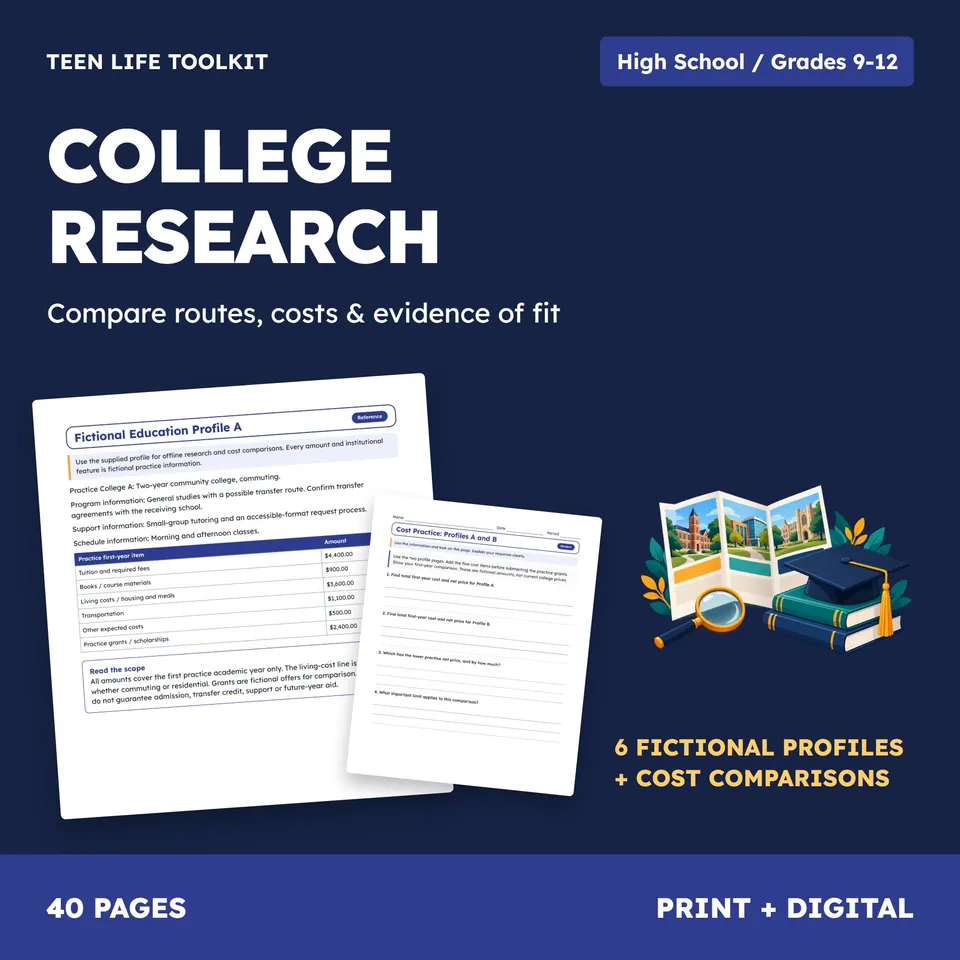
Help high school students compare college choices using costs, program fit and evidence they can check. This College Research Project pairs six detailed fictional education profiles with cost practice, learner cases, research notes and a recommendation presentation. The supplied profiles provide an offline route while the source-checking tasks prepare students to verify real options.
What's included
- Teacher guide with a 6-session sequence, materials and differentiation: support, on level and challenge
- Printed standards/skill connections and page-by-page contents
- 6 fictional education profiles covering two-year, four-year and technical routes, with program, support, schedule and first-year cost information
- 4 lessons on education routes, total cost and net price, credible information and fit/tradeoffs
- 2 cost-comparison practice pages using the supplied profiles
- 3 learner cases comparing technical, commuting-business and flexible general-studies priorities
- Research notes, claim checking and a three-option comparison
- Useful inquiry questions and a practice inquiry-message draft
- 12 college-comparison station cards with a recording page
- Recommendation presentation planner and a research-project checklist with peer review
- Final comparison check and an activity distinguishing types of funding
- Complete answer keys and model responses, plus a college-research project rubric
How to use it
Use in high school life skills, college-readiness, financial-literacy or career-and-technical education lessons. Run the 6-session sequence with the supplied offline profiles or add teacher-approved research using current official sources. Low prep: print the comparison/research pages and cut the 12 station cards if using rotations; a calculator can support the cost work. Every supplied institution, cost and support description is fictional practice information, and the cost comparisons cover the first year rather than a whole program. Students verify current real-world details before making a real decision; no admission, aid, support or career outcome is guaranteed.
Skills practiced
Comparing education routesFirst-year cost calculationNet-price reasoningFunding literacySource checkingProgram and access fitExplaining tradeoffsRecommendation writing