Life skills and special education
Fire Safety Activities for Middle & High School
Fire Prevention Life Skills
- Grades
- Grades 6–12
- Formats
- Google Slides, PDF, PowerPoint
- Pages
- 30
- Answer keys
- Included
Opens our store on Teachers Pay Teachers, where you can see the full preview and buy.
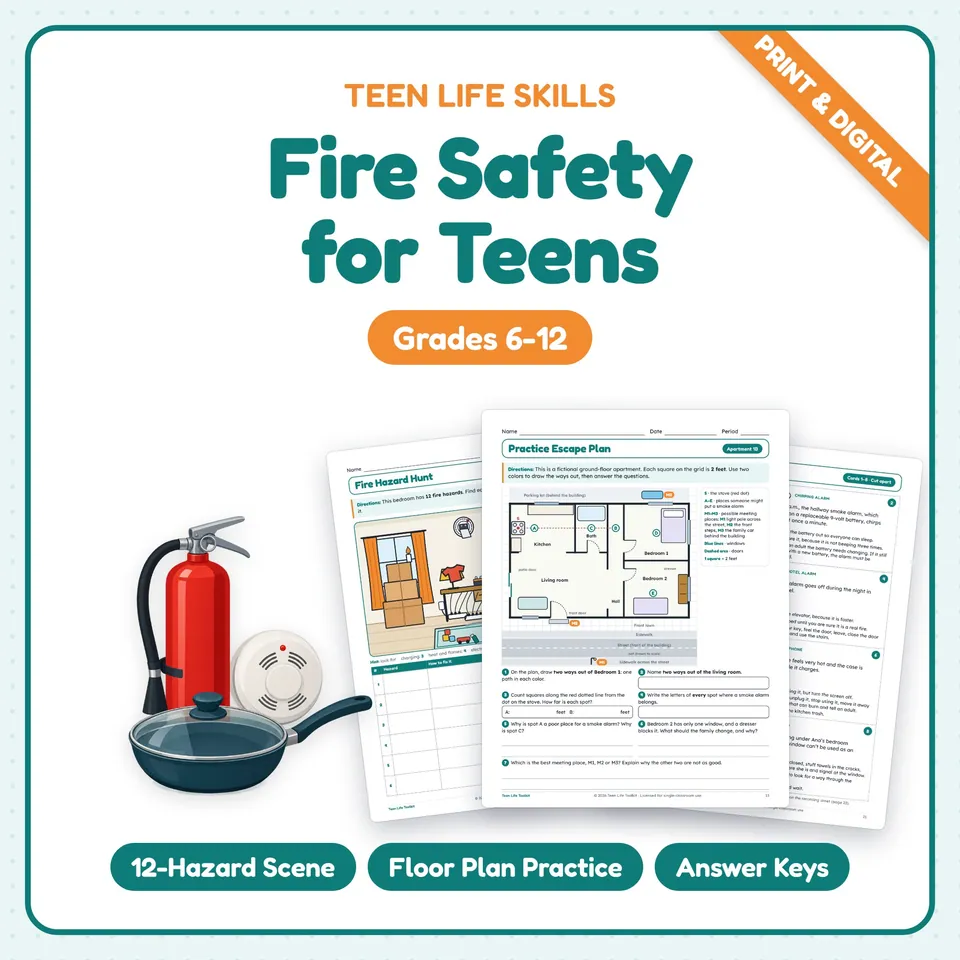
Teach fire safety that teens actually need, with activities they will remember. This low-prep fire safety pack for middle and high school covers how home fires start (including the lithium-ion batteries in phones and e-scooters), smoke alarms, home escape plans, grease fires, stop, drop and roll, calling 911, babysitting and apartment and hotel safety. Students hunt for 12 hazards in a teen's bedroom, plan escapes on a practice apartment floor plan, sort myths from facts and choose the one best action on 16 scenario cards. Every fact is checked against NFPA, U.S. Fire Administration (FEMA), CPSC and American Red Cross guidance.
What's included
- Teacher guide with 5-session pacing, learning goals and materials
- Teaching notes: differentiation (support, on level, challenge), accessible version notes for special education, sample IEP goals and teaching with care
- Standards page (National Health Education Standards) with contents
- Fire safety words: 12 words with picture supports + 12 practice sentences
- How home fires start: cooking, heating, electrical, candles, smoking materials and charging devices, with prevention tips
- Charging devices and batteries: safe charging rules, warning signs and a safe or risky check
- Fire hazard hunt: a detailed bedroom scene with 12 hazards + recording table
- Smoke alarms: where they go (numbered house diagram), testing, replacement and what each sound means
- Kitchen and clothing fires: grease fire steps (lid, never water) and stop, drop and roll
- Fire extinguisher basics for trained adults: P.A.S.S., when to use one and when to get out
- When the alarm sounds: six escape steps and what to do if you can't get out
- Practice escape plan: a fictional apartment floor plan on a grid, with smoke alarm spots, distances and meeting places
- My home escape plan: grid paper and checklist (real or pretend home)
- Family Fire Safety Night: a take-home alarm check and home fire drill
- Calling 911: what to say, a sample call, a practice call and 3 partner role-plays
- Babysitting and home alone fire safety
- Apartments and hotels: exits, stairs, and a hotel hallway door-counting map
- Myth or fact? 16 sort cards + sort mat
- What would you do? 16 scenario task cards (one best answer each) + recording sheet
- Visual steps page (Level 1): picture sequences for escaping and stop, drop and roll + a picture-supported safe or not safe check
- 16-question fire safety quiz
- 8 exit tickets
- Complete answer keys, including a numbered hazard scene, an annotated floor plan and what a strong answer includes for every open-ended question
How to use it
Use it in health, life skills, FACS, advisory or special education classes, during October fire safety lessons, or any time. Run it as a 5-session unit or pick the pages you need. Low prep: just print and cut the sort cards and scenario cards. The family page goes home for a real smoke alarm check and home fire drill. The tone is calm and practical, never frightening.
Skills practiced
Fire preventionsafe charginghazard spottingsmoke alarmsescape planningreading a floor plangrease firesstop, drop and rollcalling 911babysitting safetyapartment and hotel safetydecision making